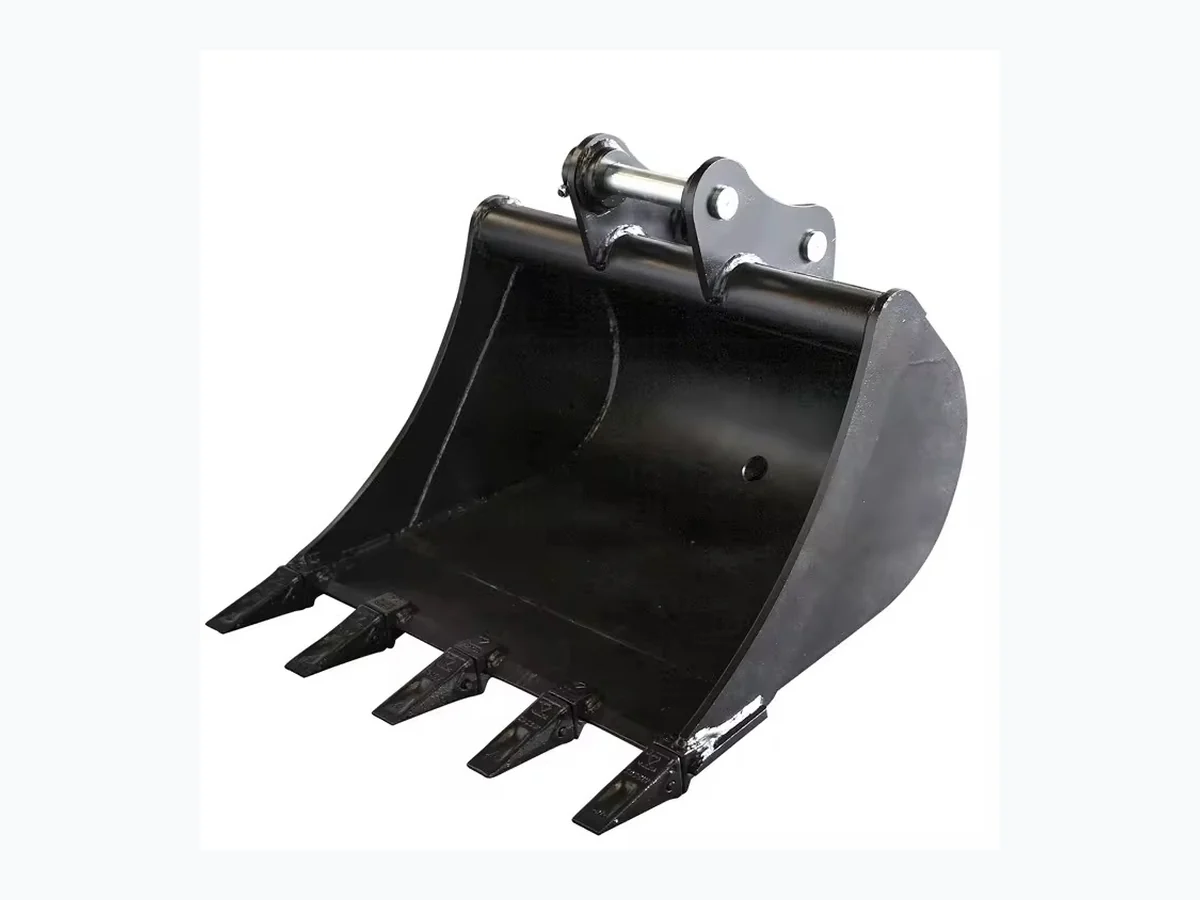
Excavator buckets and many other attachments are connected through pins and the arm or linkage. The excavator model is important, but actual mounting dimensions provide a more reliable basis for customized production.
Measure the pin diameter
Measure the diameter of the arm pin and linkage pin with a caliper when possible. If the existing pins are worn, measure an unworn area or provide the machine model and original pin specification as a reference.
Measure the pin-center distance
Measure from the center of one mounting hole to the center of the other. When measuring directly between hole edges, record both the outside and inside distance so the center distance can be calculated accurately.
Measure the inside mounting width
This is the clear width between the attachment ears where the excavator arm or linkage fits. Take measurements at both pin positions because the widths may be different.
Confirm the excavator and application
- Excavator brand, model and operating weight
- Bucket type: standard, heavy-duty, rock, skeleton or ditch-cleaning
- Required bucket width and capacity
- Material to be handled
- Tooth, side-cutter and wear-plate requirements
- Required quantity and destination
Hydraulic attachments need more information
For hydraulic breakers, grapples, compactors and demolition tools, also provide auxiliary hydraulic flow, working pressure, pipe size and whether rotation is required. The attachment must be matched to both the excavator and the actual duty cycle.
Confirm the final drawing
For customized production, review the final connection dimensions and configuration before manufacturing. Do not approve a drawing based only on the attachment name or excavator tonnage.